
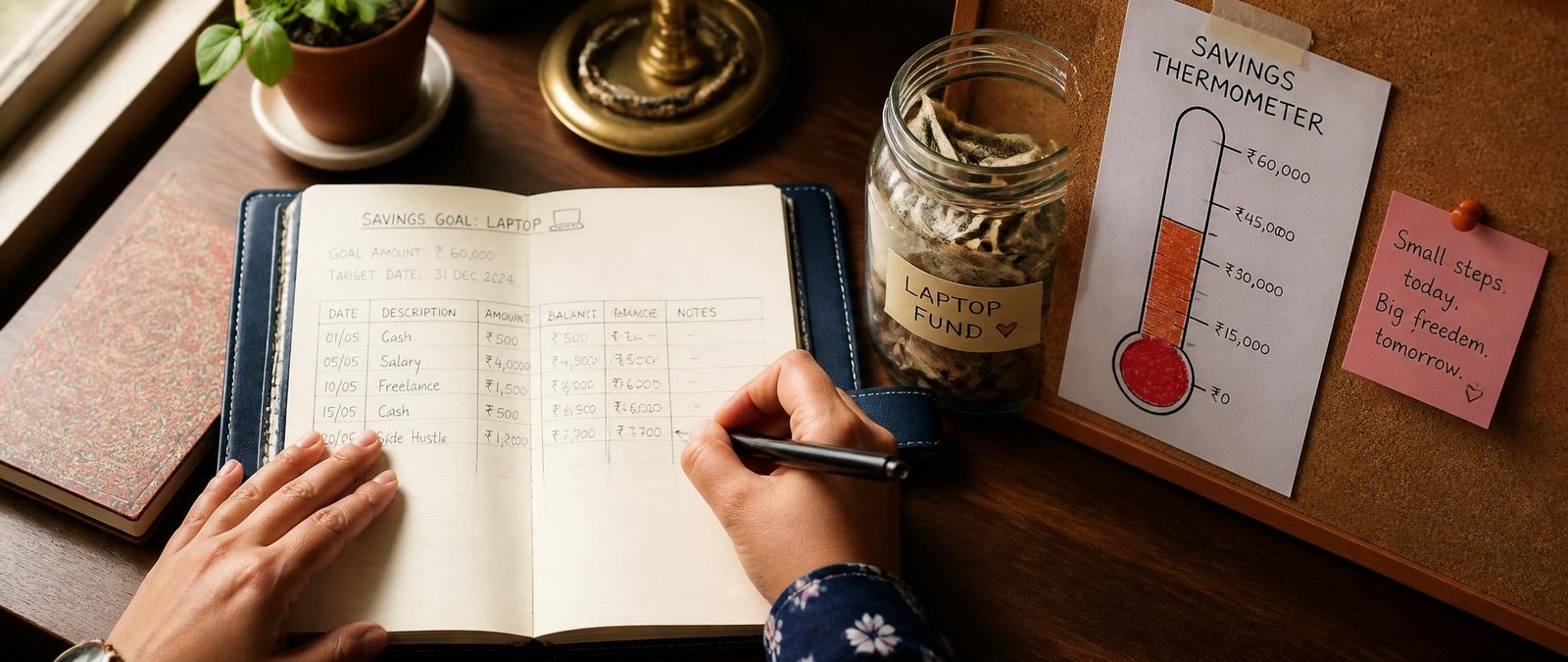
Saving money for something specific — a trip, a phone, your wedding fund, a rainy-day cushion — only works if you actually watch the number grow. Most people assume you need a fancy budgeting app for that. You don’t. If you want to track savings goals without app support, a notebook, a wall chart, or even a simple envelope can do the job just as well, sometimes better, especially once you’re already keeping tabs on monthly expenses by hand.
Apps are great, but they can also feel distant. You tap a screen, a number changes, and that’s it — no real feeling of progress. A good manual savings tracker forces you to sit with your money for a few minutes each week, and that small habit alone can push you to save faster than any notification ever could.
Why People Are Choosing to Track Savings Goals Without App Downloads
There’s a reason so many people search for ways to track savings goals without app clutter on their phone. Screen fatigue is real. After a long day of scrolling, opening yet another app to check your balance feels like a chore, not a habit worth keeping.
A paper-based or offline savings goal tracker also removes distractions. You open a notebook, you don’t get pulled into three other tabs or a notification from Instagram. That focus matters more than people give it credit for, and it pairs well with understanding your savings rate so you know exactly how fast your goal should grow.
The Envelope Method, Built for Savings Goals
The envelope method isn’t just for groceries and rent. You can use it for a single savings goal too, and it’s one of the oldest ways to save money without an app. This method also works well alongside the 50/30/20 budgeting rule, since you already know exactly how much of your income is earmarked for savings before the cash ever hits the envelope.
Here’s how it works:
- Pick a goal — say, ₹50,000 for a trip
- Label one envelope with the goal name and target amount
- Every time you get paid, physically move cash (or write down the amount you’d move) into that envelope
- Track the running total on the front of the envelope
This works so well because it’s tactile. Watching an envelope get heavier, or watching the number on it climb, feels far more real than a progress bar on a screen.
Use a Simple Notebook Ledger
A plain notebook is still one of the most reliable ways to track savings goals without app software of any kind. Rule a page into three columns: Date, Amount Added, Running Total. That’s it. This works especially well if you’re saving toward building an emergency fund, since a running total makes it obvious how many months of safety you’ve already covered.
Update it once a week, ideally on the same day — payday works well. Within a month, you’ll have a clear line graph forming in your head just from glancing at the numbers.
The Visual Progress Tracker (Thermometer or Jar Method)
If numbers alone don’t motivate you, try a visual savings goal tracker instead. Draw a large thermometer on paper, or use an actual glass jar, and mark it with your goal amount at the top. This method fits naturally into a zero based budgeting approach, where every rupee already has a job the moment it lands in your account.
- Thermometer method: color in a section every time you add money, based on percentage of the goal reached
- Jar method: use a rubber band or marker line to show the current savings level against the target
This is one of the most satisfying forms of offline savings tracking because progress is instantly visible. Kids’ piggy banks work on the exact same psychology — and it works just as well for adults chasing a real financial goal.
Try a Printable or Physical Savings Goal Chart
You don’t need software to build a chart. A printed grid taped to your fridge or wardrobe door works just as well. Split your goal into 20 or 50 equal boxes and color one in every time you hit that chunk of savings. Seeing boxes fill in over months keeps the goal from feeling abstract or endless, especially for people who are also working on cutting back on overspending so the boxes actually keep filling.
Combine a Wall Calendar With Weekly Check-ins
A regular wall calendar can double as a savings goal tracker. Each week, write the running total directly on that week’s date. Over a few months, you’ll be able to flip back and see exactly how your savings grew, and which weeks were strong or weak.
Which Manual Method Should You Pick?
| Method | Best For | Effort Level |
|---|---|---|
| Envelope method | Cash-based savers | Low |
| Notebook ledger | People who like structure | Low |
| Thermometer/jar chart | Visual motivation | Medium |
| Printable box chart | Long-term, big goals | Medium |
| Wall calendar | Weekly consistency | Low |
There’s no single “best” option here. The right way to save money without an app depends on whether you’re motivated by numbers, visuals, or routine. Many people mix two methods — a notebook for the numbers and a jar for the feeling of progress.
Common Mistakes When You Track Savings Goals Without App Reminders
- Updating too rarely — once a month is too slow to build momentum. Weekly is the sweet spot for any manual savings tracker.
- Not setting a clear target amount — vague goals like “save more” rarely get finished. Always write a number and a date.
- Mixing goals together — if you’re saving for a phone and an emergency fund at once, use separate trackers. Combined totals get confusing fast.
- Ignoring overspending elsewhere — a savings goal tracker won’t help much if your everyday spending is quietly draining the same account you’re trying to grow.
Make the Habit Stick
The best way to track savings goals without app pressure isn’t really about the tool — it’s about consistency. A notebook you update every Sunday will beat an app you open once a month, every single time. Pick one method from this list, put it somewhere you’ll actually see it, and update it on the same day each week. In a few months, you won’t need motivation to keep going. You’ll just want to see that number move.
Leave a Reply