
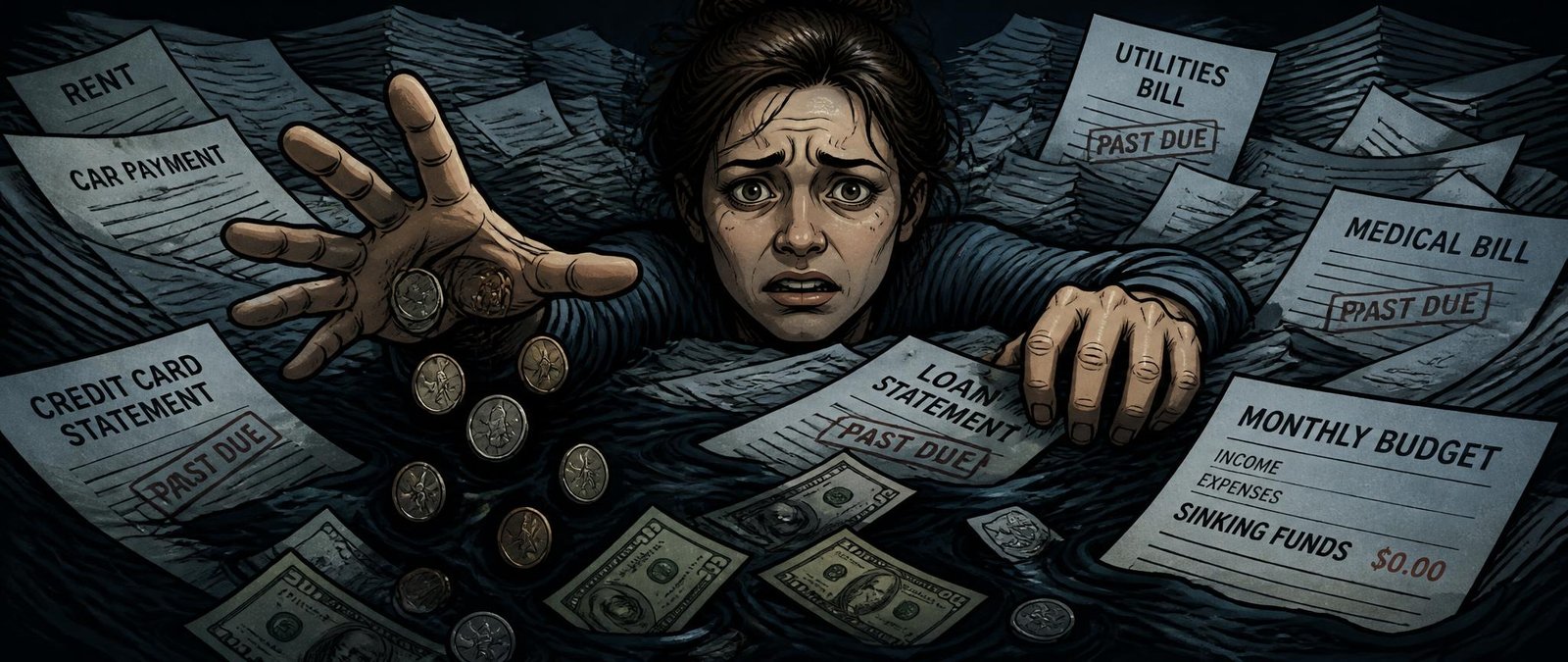
Every year, the same story. The car service returns an ₹18,000 bill. Wedding invites arrive three at a time. The insurance premium lands right after Diwali — none of it a real emergency, yet all of it a budget-wrecker.
So what is a sinking fund? It’s money you tuck away slowly, on purpose, for a cost you know is coming. Nail this one habit and the “sudden” bills you build a monthly budget around stop feeling sudden at all.
It’s the calm middle ground between spending everything today and scrambling to separate needs from wants after the money has already vanished.
Table of Contents
What Is a Sinking Fund, Exactly?
The plain answer to what is a sinking fund is a small, dedicated pot of money that fills up over time for one clear purpose. You choose the goal, the deadline, and the monthly amount — then you feed it, month after month.
Say your car service costs ₹18,000 and comes once a year. Instead of panicking in month twelve, you tuck away ₹1,500 a month. When the bill lands, the money is already there. No stress, no credit card, no borrowing from next month’s rent.
That’s the whole idea: planned saving for planned spending. It’s the same simple discipline behind the 50/30/20 budgeting rule — give every rupee a job before the month begins. Done well, it’s one of the easiest ways to reach your savings goals without waiting on a lucky month.
Sinking Fund vs Emergency Fund
People mix these two up constantly, so let’s clear it up. The difference comes down to one word: surprise.
- An emergency fund is for the unknown — a job loss, a hospital visit, a sudden repair. You hope you never touch it.
- A sinking fund is for the known — a wedding, a big trip, a yearly premium. You fully expect to spend it.
Both matter, and they work best as a team. Your sinking funds cover the predictable costs, so you’re not raiding a proper emergency fund every time life sends a bill you already saw coming. Keeping the two apart is also how you stop overspending each month, because money with a label is far harder to fritter away.
Sinking Fund Categories Worth Setting Up
You don’t need twenty pots. Start with the irregular expenses that hit hardest in your own life. Here are common sinking fund categories that work for most Indian households:
- Festivals and gifting — Diwali, weddings, birthdays
- Vehicle — service, insurance, new tyres
- Annual bills — premiums, subscriptions, school fees
- Travel — that one big trip you take each year
- Health — dental work, new spectacles, planned procedures
- Home — repairs, appliances, the fridge on its last legs
Pick three to five that match your real life. Trying to fund every category at once is the fastest way to quit — fewer buckets means more consistency, and far better odds of actually sticking with it past month two.
How to Start a Sinking Fund in 4 Steps
Once you’re clear on what is a sinking fund, building one takes minutes:
- List the expense and its real cost. Be honest — ₹40,000 for Diwali, not a hopeful ₹15,000.
- Set the deadline. Ten months to Diwali means you divide by ten.
- Do the maths. Total ÷ months = your monthly amount. ₹40,000 ÷ 10 = ₹4,000.
- Automate it. Move that amount to a separate account the day your salary lands.
The real trick is separation. Money left sitting in your main account quietly gets spent — that’s just how it goes. Keeping each fund visible and apart is what keeps the plan alive when temptation shows up in the middle of the month.
Small Amounts, Big Calm
You don’t need a big salary for this. You need a plan and a little consistency. A few hundred rupees a month, stacking quietly toward bills you already know are coming, is the whole difference between a stressful year and a smooth one.
Picture it: ₹1,500 a month for the car service, ₹4,000 for Diwali, ₹800 for the insurance premium. That’s three yearly shocks quietly handled long before the bills ever land — no scrambling, no guilt, no swiping a credit card in a panic.
Now that you know what is a sinking fund, the only hard part is starting. Pick the one expense that always catches you out, work out the monthly number, and move it aside this month — before the next big bill does it for you. Future you will be very glad you did.
Leave a Reply