
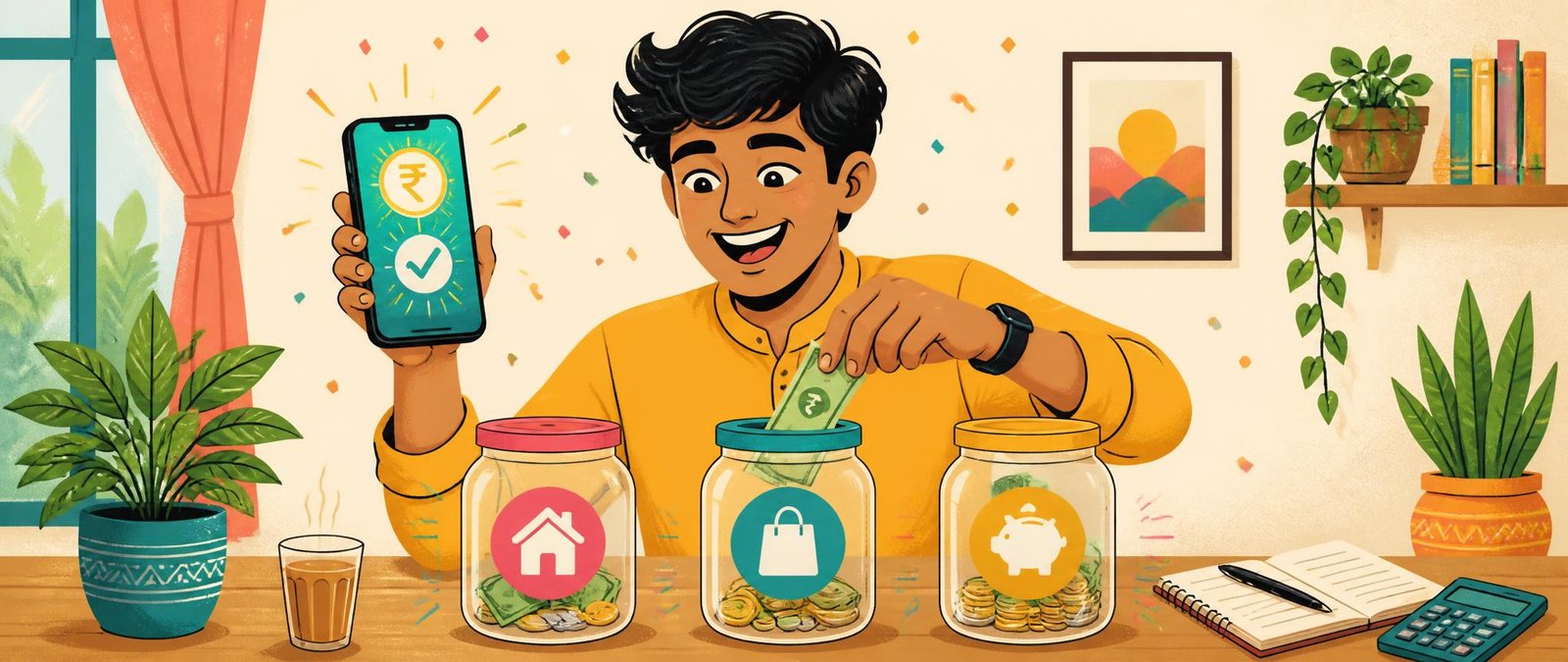
There’s nothing quite like the first time your own money lands in your account. Not pocket money, not an allowance — money you earned. The instinct is immediate and powerful: buy the phone, book the trip, treat everyone to dinner, finally get the thing you’ve been eyeing for months.
And you should celebrate — you’ve earned it. But how you handle those first few paychecks quietly sets the pattern for the next decade of your financial life, and it’s often where budgets quietly fall apart before they ever begin. Learning how to manage your first salary well isn’t about being boring or depriving yourself. It’s about setting up a few simple habits now, while it’s easy, so that money works for you instead of slipping through your fingers. Get this right and you’ll be years ahead of peers who spent their twenties wondering where it all went.
Table of Contents
How to Manage Your First Salary: Start With the 50/30/20 Split
Before you spend a single rupee, give your salary a structure. The simplest one to start with — and the one most worth learning young — is a basic percentage split.
The idea is to divide your take-home pay into three buckets: needs, wants, and savings. The classic version is the 50/30/20 budgeting method: 50% to needs (rent, food, transport, bills), 30% to wants (dining out, shopping, subscriptions), and 20% to savings. On a ₹30,000 first salary, that’s ₹15,000 for needs, ₹9,000 for wants, and ₹6,000 saved.
The exact numbers matter less than the principle: budgeting your first salary means deciding where money goes before it disappears, not wondering where it went afterward. Half the skill is simply telling needs from wants apart so each bucket gets the right amount. If you live with family and your needs are low, push more into savings. The framework bends to your life — but having a framework at all is what separates people who build wealth from people who just earn it.
Pay Yourself First — Before You Spend a Rupee
Here’s the single most valuable habit you can build with your first paycheck: save before you spend, not after.
Most people plan to save whatever’s left at the end of the month. The problem is that there’s almost never anything left — spending expands to fill whatever’s available. The fix is to flip the order. The moment your salary lands, move your savings amount to a separate account automatically. Then live on what remains, and track your monthly expenses so you always know where that “what remains” is actually going.
This “pay yourself first” approach is powerful precisely because it doesn’t rely on discipline. You’re not resisting temptation all month — the money’s already gone somewhere safe before you could spend it. This is one of the most important first job money tips anyone can give you, and it’s why willpower alone rarely works: systems beat self-control every time. If you learn just one thing about how to manage your first salary, make it this.
Build a Small Emergency Fund Early
You’re young, healthy, and maybe still living with family — an emergency fund can feel unnecessary. It isn’t. It’s the thing that stops a surprise expense from becoming a debt spiral, and starting one in your first year is a genuine head start. Part of managing money in your first job is building this cushion before you think you need it.
You don’t need much to begin. Even ₹1,000–₹2,000 a month builds a meaningful cushion within a year. The goal early on isn’t a full six-month fund — it’s simply the habit, plus enough to handle a phone repair or a sudden trip home without panicking. Directing part of your first paycheck savings here matters: the same steps for building an emergency fund apply whether you’re 22 or 42 — you just have the enormous advantage of starting early. Prioritising first paycheck savings over an immediate splurge is what sets the whole thing in motion.
Don’t Fall for Lifestyle Inflation Immediately

This is the trap that catches almost everyone with a first salary. The moment money arrives, so does the temptation to upgrade everything — nicer clothes, better phone, fancier plans, a lifestyle that matches your new income. It’s the same pattern behind salary hikes building no savings, except it starts with your very first paycheck.
A little celebration is healthy. But if your spending rises to match every rupee you earn, you’ll be broke on ₹30,000 and still broke when you’re earning ₹80,000 — because the lifestyle will have risen right alongside the income. This is exactly how salary hikes fail to build savings, and the pattern starts with the very first paycheck. Learning to enjoy your money consciously — funding the wants you truly value and skipping the ones you don’t — is a skill that pays off for life.
A Simple First-Salary Game Plan
Here’s the whole of how to manage your first salary in one place, in the order to do it:
| Step | What to Do | Why |
|---|---|---|
| 1. Split your salary | Use a 50/30/20 structure | Gives every rupee a job |
| 2. Automate savings | Move 20% out on payday | Saves before you can spend |
| 3. Start an emergency buffer | ₹1,000–2,000/month | Stops surprises becoming debt |
| 4. Track your spending | Log where money goes | Reveals invisible leaks |
| 5. Enjoy — consciously | Fund wants you truly value | Celebration without regret |
None of this requires sacrifice or complicated finance knowledge. It’s five small habits that, started now, compound into an enormous advantage over the years. Much of managing money in your first job simply means doing these consistently.
Track Where It Actually Goes
For your first few months, keep a close eye on your spending. Not to police every rupee — just to see the reality of where your money goes, which is almost always different from what you’d guess.
Most first-earners are genuinely surprised by how much vanishes into small, forgotten spends: food delivery, subscriptions, impulse buys, the “just ₹200” purchases that add up to thousands. Watching where your money actually goes makes those leaks visible — and once you can see them, you can plug them. Awareness alone often cuts spending without any painful sacrifice, and it’s a core part of how to manage your first salary well.
Start Smart, Thank Yourself Later
Knowing how to manage your first salary isn’t about turning into a joyless saver who never enjoys their money. It’s the opposite — it’s about setting up a few effortless habits now so you can enjoy your money for years without stress or regret.
Split your salary into buckets. Pay yourself first, automatically. Start a small emergency fund. Resist the urge to upgrade everything at once. And track where your money goes, at least at the start. Get budgeting your first salary right in these five moves, and future-you — the one who has savings, no panic during emergencies, and money for the things that genuinely matter — will be endlessly grateful you started on day one.
Your first salary is a beginning. Treat it like one.
Leave a Reply